

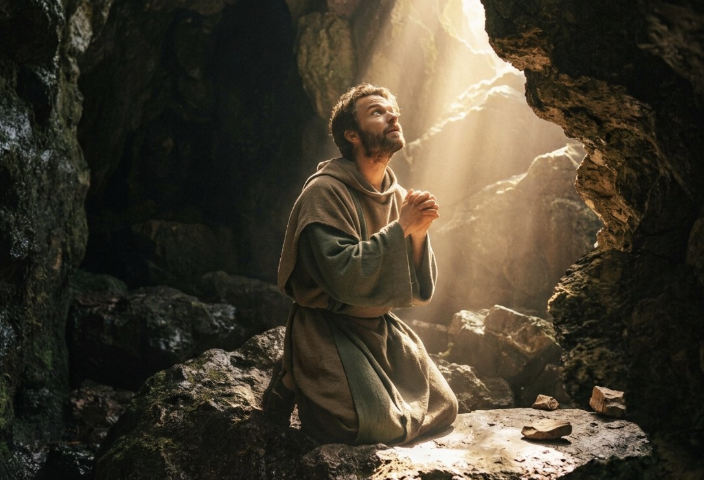
The Lord, My Guide and Keeper
Scripture quotations are from the EasyEnglish Bible Copyright © MissionAssist 2018, 2024 – UK Charitable Incorporated Organisation 1162807. Used by permission. All rights reserved. www.easyenglish.bible
Psalm 16
1 Please keep me safe, God, because I come to you for help.
2 I have said to the Lord, ‘You are my Lord. All the good things that I have in my life are gifts from you.’
3 When I think about your own people who live in this land, it makes me happy! They are truly great people!
4 But many troubles will come to people who choose to worship other gods. I will not join with them to offer gifts of blood to their gods. I will never use the names of their gods to make promises.
5 You, Lord, are all that I need. What you give me is enough, for me and for my descendants*.
6 Yes, you have given me a good way of life. Your gifts are better than good fields or valuable land.
7 I will praise the Lord, who is my guide through life. In the dark nights, you help me to learn what is right.
8 I will always trust the Lord to be with me. He is very near to me, so I will not be upset.
9 I am truly happy and I thank God. I know that my life is safe with God.
10 You, Lord, will not leave me in the deep hole of death. As someone who belongs to you, you will not leave my body to spoil in my grave.
11 You will lead me along the path of life. Because you are with me, I am very happy. I know that I will be with you forever, and that makes me very happy!
__________________
Important Vocabulary to Learn
(Some of these words are in the reading above and some come from the reading and questions below.)
1. Words from the first 1000 high frequency General Service Word List
belong(s) (to), blood, body, cause(d), choose, dark, death, deep, enough, fields, future, gifts, ground, happy, hundreds, interesting, join, know, learn, leave, Lord, Messiah, near (to), never, offer, people, promise(s)/promised, reason(s), rich, safe, share, spirit, troubles, truly, trust, valuable
(And all the other words in both of the readings, and in the questions below that are not listed in numbers 2, 3 and 4 here.)
2. Words from the second 1000 high frequency General Service Word List
alive, buried, correct, grave, guide, hole, path, praise, spoil, thank, upset, worship
3. Words from the high frequency Academic Word List
challenge(s)
4. Off List Words (these words are marked with a *)
ancestor, clue, descendants, forever
__________________
Learning Questions and Activities
1. Remembering - David said, ‘I will always trust God’. Give three reasons that you can remember from the reading that show why he said this.
2. Understanding - In verse 6, David said, ‘Yes, you have given me a good way of life. Your gifts are better than good fields or valuable land.’ It seems that David means that God’s gifts to him are not just the things he has on Earth. If David is not just thinking about the things he needs for living, what kind of gifts do you think David might mean in this verse? (Clue: Take another look at verses 7 to 11.)
3. Applying - What can you thank and praise God for? Think of all the things He gives you that you need each day, but also think about the good things God gives that help you trust Him in your spirit, as David did.
Do you also think, as David did, that the gifts that God has given you are 'enough'? Are you truly happy with what God has given you? What is more important to you right now, the things you have on Earth, or your future ‘forever’ life? Why? Will you have a 'forever' life with God? How do you know?
4. Analysing - What do you think David means by ‘the dark nights’? Is he just talking about the hours of night time, or does he mean something more than that? (Clue: Look again at verse 1 and verse 9.) He says that in those dark times God helps him to learn ‘what is right’. How can ‘dark nights’ (challenges, or hard times) teach us more about ‘what is right’ in God’s eyes? How can dark times teach us more about the kind of God we have?
In Verse 7, David says He will praise God because He ‘...is my guide through life.’ Then, in Verse 11, he says to God, ‘You will lead me along the path of life.’ How does God lead and guide those who love and praise Him?
5. Evaluating - In verse ten, David says ‘You, Lord, will not leave me in the deep hole of death. As someone who belongs to you, you will not leave my body to spoil in my grave.’
One day, David died, just as all of us will. David’s body was buried and his body was ‘spoiled’ and became part of the earth. So who was David speaking of when he wrote this verse, Himself or someone else? Before you try to answer this question, take a look at this other Bible reading below…
Acts 2
29 “Peter then said, ‘Friends, people of Israel, I must speak clearly to you about our ancestor*, King David. He died and people buried his body in the ground. You can still see the place where people buried him.
30 He was a prophet. He knew what God had promised to do for him. He knew that one of his descendants would be king of God's people one day.
31 David understood what God would do in a future time. He did not speak about himself, but he spoke about the Messiah*. He said that God would cause this man to become alive again after his death. God would not let him remain in the deep hole of death. Nothing would destroy his body.
32 This man that David talked about is Jesus. After his death, God caused him to become alive again. We ourselves saw this happen. All of us saw it.”
The reading above comes from the book of Acts in the New Testament. The writer of Acts (Doctor Luke) wrote down Peter’s words to help his readers to know for sure that Jesus is the promised Messiah. It is interesting to know that Peter said these words many hundreds of years after David wrote Psalm 16.
Here are three questions we might ask when we think about verse ten in Psalm 16. Which one you think is right?
1. Was David speaking of himself only, and his own ‘forever’ future with God after he died? (Verse 11.)
2. Was David speaking as a prophet? Was he looking to the far off future on Earth, and speaking about someone else (Jesus the Messiah), as Peter said in Acts 2?
Or
3. Is it possible that both ways of understanding this Psalm are correct (both 1 and 2 are true at the same time)?
Give some reasons for your answer. As you think about this, remember that the book of Acts is also part of the Word of God.
6. Creating - Read the last verse of the Psalm again. Here it is…
11 "You will lead me along the path of life. Because you are with me, I am very happy. I know that I will be with you forever, and that makes me very happy!"
Look at the first drawing below (1). It shows some of the good things that we experience in our lives and also some challenges.
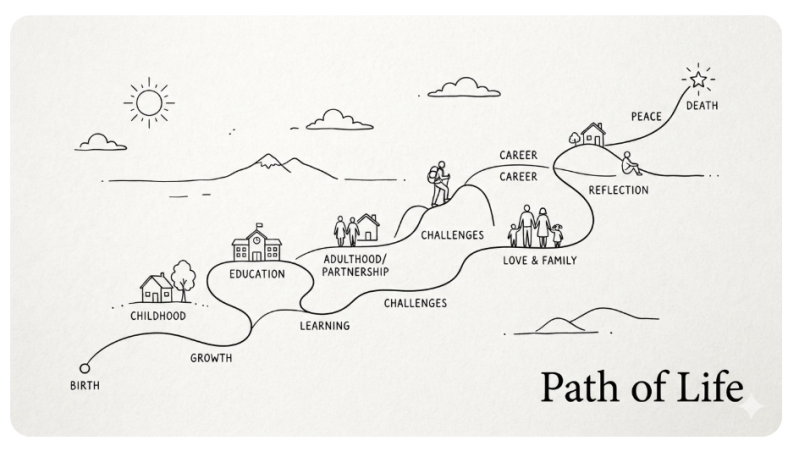
Now look at this drawing. (2)
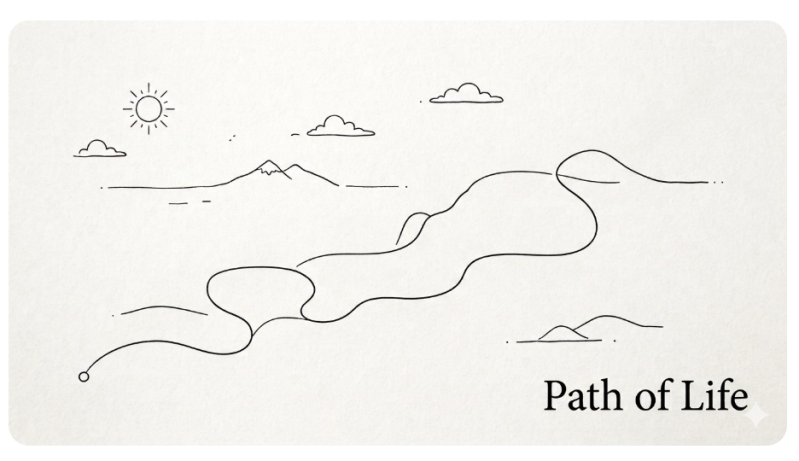
Think about your own path of life. What are some good things that you can thank God for? What are some of the challenges you have had? Draw some of the things you thought about onto the second drawing above (both good things and challenges).
Share your drawing with someone. Tell them what you can give thanks to God for. Tell them what you have learned from the challenges in your life. How did God help you with those challenges?
Now read Psalm 16 again. This time, choose one of the verses that you really like. Learn it so that you can say it without looking at the words. Now, say it to someone. Ask that person to read the verse as you speak so they can tell you if you got it right. Then, say (in English) why you chose that verse.
What did you learn from Psalm 16 that will help you trust in God more as you go along your life’s path in the future?
Create Your Own Website With Webador